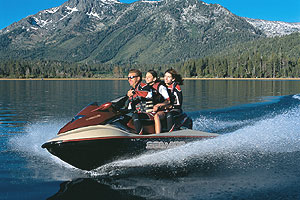
Sea-Doo GTX 4-TEC: Four-Stroke Personal Watercraft
Sea-Doo GTX 4-TEC: four-stroke promises to be cleaner, quieter and more efficient.
August 6, 2001

Sea-Doo's GTX 4-TEC will be available in early 2002.
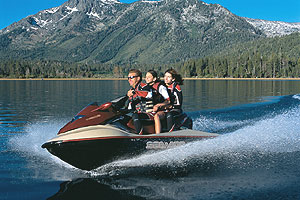
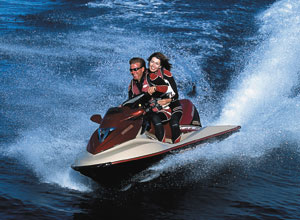
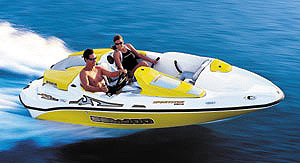
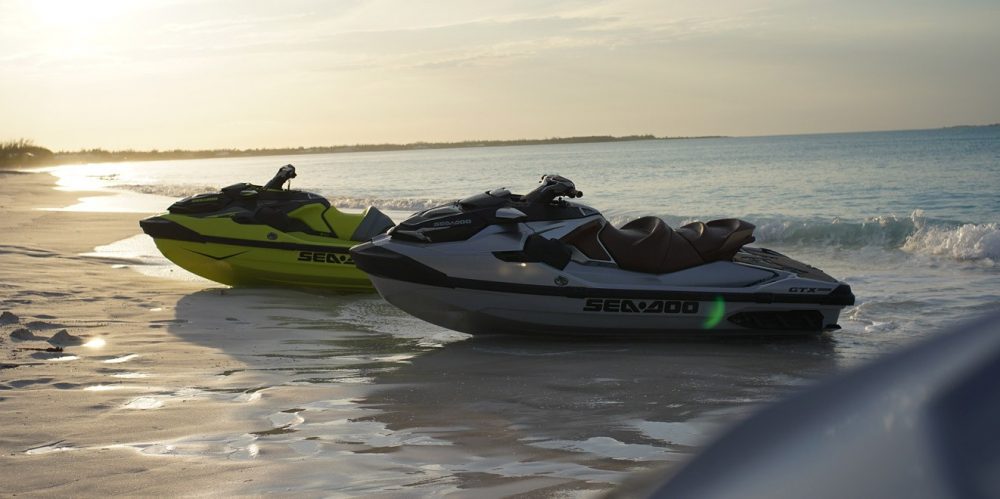
Sea-Doo will unveil its first four-stroke personal watercraft in mid-August. Called the GTX 4-TEC, the new three-rider model is based on the successful GTX platform.
In releasing the GTX 4-TEC, Sea-Doo will join an exclusive two-member club of watercraft manufacturers that have officially announced they will produce a four-stroke model in 2002. Earlier, this month, Yamaha announced it would roll out a four-stroke watercraft for its dealers and the media in mid-August.
A release date for Honda's planned four-stroke watercraft has not been set. The company currently does not build watercraft, but announced plans to do so last fall.

The popular GTX platform was used for the new four-stroke model.
All existing personal watercraft currently are powered by two-stroke engines, which have faced increasingly stringent Environmental Protection Agency emissions standards. Personal watercraft and two-stroke outboard engine manufacturers first responded to EPA mandates by applying by direct-injection technology to two-stroke motors. The results were cleaner and more efficient powerplants and, according to their manufacturers, compliance with the stricter standards. However, the move toward four-stroke power, by the leading personal watercraft manufacturers in the market, is another step toward cleaner power.
The GTX 4-TEC reportedly exceeds EPA 2006 standards.
According to a press release from Bombardier, parent company of Sea-Doo, the GTX 4-TEC " is specially designed to meet the rapidly changing demands of watercraft consumers while complying with the worldwide efforts of respecting environmental sensitivity."

Highlights of the new 4-TEC motor include 12-valve design and an innovative cooling system.
The GTX 4-TEC will be powered an in-line three-cylinder engine that runs on 87-octane fuel. The 1,500cc motor features a 12-valve design and, according to the manufacturer, creates substantial torque, strong acceleration and outstanding top end performance.
The engine also boasts a closed-loop cooling system in which the watercraft's ride plate is used as an engine-coolant heat exchanger, much like an automobile radiator. A dry-sump Tipover Protection called dubbed TOPS activates a valve to stop oil flow into the combustion chambers if the watercraft rolls over.
Look for a complete review of the GTX 4-TEC on boats.com this fall.